

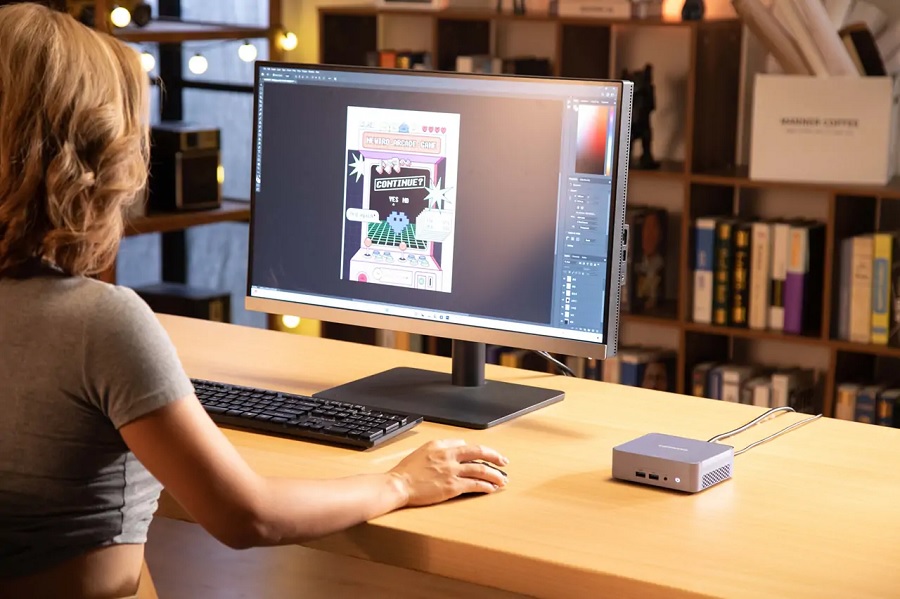
For decades, the undisputed symbol of serious computing power was the massive, humming tower parked beneath a desk. These heavy metal enclosures dominated office cubicles and home studies, demanding significant physical space and drawing substantial electrical power. The conventional wisdom was simple: if you wanted high performance, you needed a large footprint. However, a silent revolution has been taking place in the hardware industry, fundamentally challenging this long-held assumption. Today, mini PCs have emerged as formidable contenders in the technology market, radically transforming how we design our workspaces and configure our home computing environments.
By leveraging the incredible advancements in mobile silicon and thermal management, these compact machines deliver desktop-class performance in a chassis often no larger than a hardcover book. This shift is not merely a triumph of miniaturization; it represents a complete reimagining of the relationship between our physical environments and the digital tools we rely on daily.
The Architectural Leap Behind the Miniaturization
To understand why mini PCs are experiencing such a massive surge in adoption, it is necessary to look at the underlying architecture that makes them possible. Historically, small form factor computers were heavily compromised devices. They relied on low-voltage processors designed for cheap laptops, resulting in sluggish performance that could barely handle multiple browser tabs, let alone complex productivity software.
The modern landscape is entirely different. The processors driving today’s compact systems benefit from highly refined manufacturing processes that pack billions of transistors onto incredibly small dies. This leap in silicon efficiency means that modern CPUs can execute massive amounts of data without generating the extreme heat that previously required massive cooling fans and sprawling heatsinks.
Hardware engineers have effectively bridged the gap between mobile efficiency and desktop power. By placing high-performance laptop processors inside a slightly larger, better-ventilated enclosure than a traditional notebook, these chips are allowed to run at their maximum potential without aggressively thermal throttling. The result is a machine that can comfortably handle everything from massive spreadsheet compilation to graphic design, all while remaining virtually silent and consuming a fraction of the electricity of a traditional tower.
Redefining the Modern Office Environment
The modern corporate workspace looks vastly different than it did just a decade ago. The push toward minimalist design, flexible workstations, and open-plan offices has made bulky hardware a liability. In this context, the mini PC is a perfect infrastructural fit.
Reclaiming Desk Real Estate
The most immediate and tangible benefit of transitioning to a compact computer is the dramatic recovery of physical space. A cluttered desk inherently breeds distraction and can negatively impact workflow. Because most mini PCs support VESA mounting standard, they can be easily attached directly to the back of a computer monitor or discreetly mounted beneath the surface of a desk.
This creates a remarkably clean, zero-footprint workstation. Without a large tower taking up floor space or crowding the desk surface, employees have more room for documents, reference materials, or simply a clearer environment to focus. The aesthetic shift from a chaotic tangle of cables and bulky hardware to a sleek, streamlined desk has a documented positive effect on psychological well-being and daily productivity.
Enterprise Agility and IT Logistics
From an organizational standpoint, fleets of compact computers offer tremendous logistical advantages. Traditional desktop towers are expensive to ship, difficult to store, and cumbersome to deploy. When a company needs to onboard fifty new employees, transporting and setting up fifty full-sized desktops requires significant physical labor and time.
Mini PCs fundamentally streamline this process. An entire department’s worth of computing power can easily fit onto a single shipping pallet. For IT departments, maintenance becomes incredibly agile. If a unit fails, a technician can simply walk over with a replacement tucked under their arm, swap it out in three minutes, and take the defective unit back to the lab for diagnostics. This modular approach to enterprise hardware drastically reduces downtime and lowers the overhead costs associated with hardware lifecycle management.
Revolutionizing the Home Computing Ecosystem
The impact of small form factor computers extends far beyond the corporate enterprise. In the home, these devices are blurring the lines between traditional desktop computers, media centers, and smart home hubs.
The Ultimate Home Theater Engine
For home entertainment enthusiasts, the living room television has long been a battleground of streaming sticks, gaming consoles, and set-top boxes. While these devices are convenient, they are ultimately locked into restrictive software ecosystems.
Connecting a mini PC to a living room television transforms the display into a fully uncompromised media engine. Users are no longer restricted by the limitations of smart TV app stores. A compact computer running a full operating system can effortlessly stream uncompressed 4K media, act as a massive local file server, handle heavy ad-blocking at the network level, and support deep customization through open-source media center software. Because these machines are designed to operate quietly, they blend seamlessly into a media console without the distracting fan noise that plagues larger systems.
Empowering Remote Work and Flexible Living
The normalization of remote work has forced millions of people to carve out office spaces in their homes. Not everyone has a dedicated spare bedroom to convert into an office. Many remote workers operate out of a corner of their living room, a repurposed dining table, or a tiny apartment alcove.
In these space-constrained environments, a massive tower is an unacceptable intrusion. A mini PC allows a user to maintain a powerful, dedicated workstation that doesn’t visually dominate the living space. When the workday is over, the computer practically disappears into the background, helping remote workers maintain a necessary psychological boundary between their professional and personal lives.
Bridging the Gap for Creators and Casual Gamers
Historically, the Achilles’ heel of any small computer was graphic performance. Creative professionals editing high-resolution video and gamers requiring high frame rates were tethered to massive towers that could accommodate large, dedicated graphics cards.
While the most demanding professional renderers and hardcore gamers still require full-sized workstations, the capabilities of integrated graphics have skyrocketed. The latest generation of onboard graphics architecture is fully capable of driving multiple 4K monitors simultaneously, scrubbing through 4K video timelines smoothly, and playing modern games at respectable settings.
Furthermore, the widespread adoption of high-bandwidth connectivity standards like Thunderbolt 4 and USB4 has introduced a new layer of flexibility. Users can now pair a silent, compact PC with an external GPU (eGPU) enclosure. This allows a user to enjoy a minimalist setup for standard daily tasks and instantly tap into massive graphical horsepower only when a specific project or gaming session demands it.
The Economic and Ecological Perspective
When deciding between a laptop and a desktop for a deskbound setup, the mini PC often emerges as the most economically logical choice. Many consumers default to buying a laptop simply to save space, even if that device will never actually leave their desk. In doing so, they pay a significant premium for a battery, trackpad, keyboard, and screen that they do not truly need, while simultaneously introducing components that are guaranteed to degrade over time.
By stripping away the mobile components, a compact PC provides much better performance per dollar. You are paying exclusively for computing power. Moreover, because they utilize standard ports, users can upgrade their monitors, mechanical keyboards, and ergonomic mice independently, rather than being forced to replace an entire laptop just because its battery will no longer hold a charge.
This modularity is heavily tied to environmental sustainability. The technology sector is responsible for staggering amounts of electronic waste. Because mini PCs require a fraction of the raw materials—aluminum, plastic, and rare earth metals—to manufacture compared to a traditional tower, their initial carbon footprint is considerably lower. Coupled with their ultra-low power consumption, transitioning to small form factor computing represents a meaningful step toward sustainable technological consumption.
Understanding the Inevitable Compromises
Despite their transformative benefits, these devices are not universal solutions. The laws of physics still apply, and packing high-performance components into a tiny box necessitates certain compromises that buyers must carefully consider.
The primary trade-off is limited internal upgradeability. While most units allow the user to easily swap out RAM modules and NVMe storage drives, the processor and motherboard are almost always a single, soldered unit. You cannot upgrade the CPU a few years down the line as you can with a traditional desktop motherboard. Additionally, while thermal management is excellent for burst workloads, sustained maximum loads—such as rendering complex 3D animations for hours on end—will eventually cause the system to throttle its speed to prevent overheating. Users whose livelihoods depend on shaving seconds off render times will still find traditional towers necessary.
The Future of Deskbound Computing
The era of defaulting to a massive, air-filled metal box for standard computing needs is drawing to a close. The mini PC represents a fundamental maturation of hardware design, proving that we no longer need to equate physical size with digital capability. By offering a perfect synthesis of laptop efficiency and desktop ergonomics, these small machines are quietly driving a major shift in how we work, play, and organize our spaces.
As silicon continues to evolve and power efficiency reaches new heights, the footprint of our technology will continue to shrink. For the modern professional, the remote worker, and the home computing enthusiast, the future of the desktop is undoubtedly smaller, smarter, and significantly more refined.